The Hidden Cost of Neglecting Industrial Cladding and How to Stay Ahead of It
Industrial cladding rarely gets the attention it deserves until something goes wrong. It sits on the outside of buildings, quietly doing its job keeping weather out, retaining heat or cold, protecting the structure beneath. But when it begins to fail, the consequences can move quickly from cosmetic to structural, and from manageable to expensive.
For facilities managers, engineering teams, and asset owners responsible for industrial and commercial buildings, understanding how and why cladding deteriorates and what a proactive maintenance strategy looks like is one of the more valuable things they can know.
Why cladding fails
Industrial cladding whether metal profiled sheeting, composite panels, or built-up systems is designed to last, but it is not maintenance-free. The most common causes of deterioration are:
Corrosion and coating breakdown. Metal sheeting relies on its protective coating to resist corrosion. UV exposure, industrial pollutants, and coastal environments can degrade that coating over time, particularly at cut edges, fastener points, and areas where standing water collects. Once bare metal is exposed, rust progresses rapidly.
Fastener failure. The screws, rivets, and fixings that hold cladding panels in place are often the first point of failure. Neoprene washers degrade, fixings work loose under wind loading, and poorly installed or corroded fasteners allow water ingress that can track deep into the building fabric.
Sealant and joint degradation. Silicone and mastic sealants at panel joints, roof-to-wall junctions, and penetration details have a finite service life. When they harden, crack, or pull away, water finds a path in.
Impact damage. In industrial environments, forklifts, plant movements, and operational activity create impact damage that is often noted and then quietly forgotten — until it becomes a water ingress problem.
Select a failure point to learn more
The real cost of reactive maintenance
The temptation is always to deal with cladding issues reactively, to wait until a leak appears and then fix it. The problem is that by the time water ingress is noticed inside a building, the damage has usually been building for months. Insulation becomes saturated, structural steelwork corrodes, internal linings are affected, and the scope of remedial work expands significantly.
A reactive repair to address an active leak is almost always more expensive — and more disruptive — than the planned maintenance that would have prevented it.
Select a stage to see what happens if defects go unaddressed
What proactive cladding maintenance looks like
A well-structured maintenance programme begins with a condition survey. A competent surveyor will assess the existing cladding system, identify areas of deterioration, note any immediate defects, and produce a prioritised schedule of works. This gives asset owners a clear picture of where they stand and a defensible record of due diligence.
From there, maintenance typically involves a combination of: cleaning and treatment of corroded areas; overcoating or full coating replacement; fastener replacement; sealant strip-out and renewal; and localised panel replacements where damage is beyond remediation.
The beauty of a planned approach is that it allows work to be phased across maintenance windows, budgeted accurately in advance, and delivered without the urgency and cost premium that emergency repairs always attract.
Accessing difficult areas safely
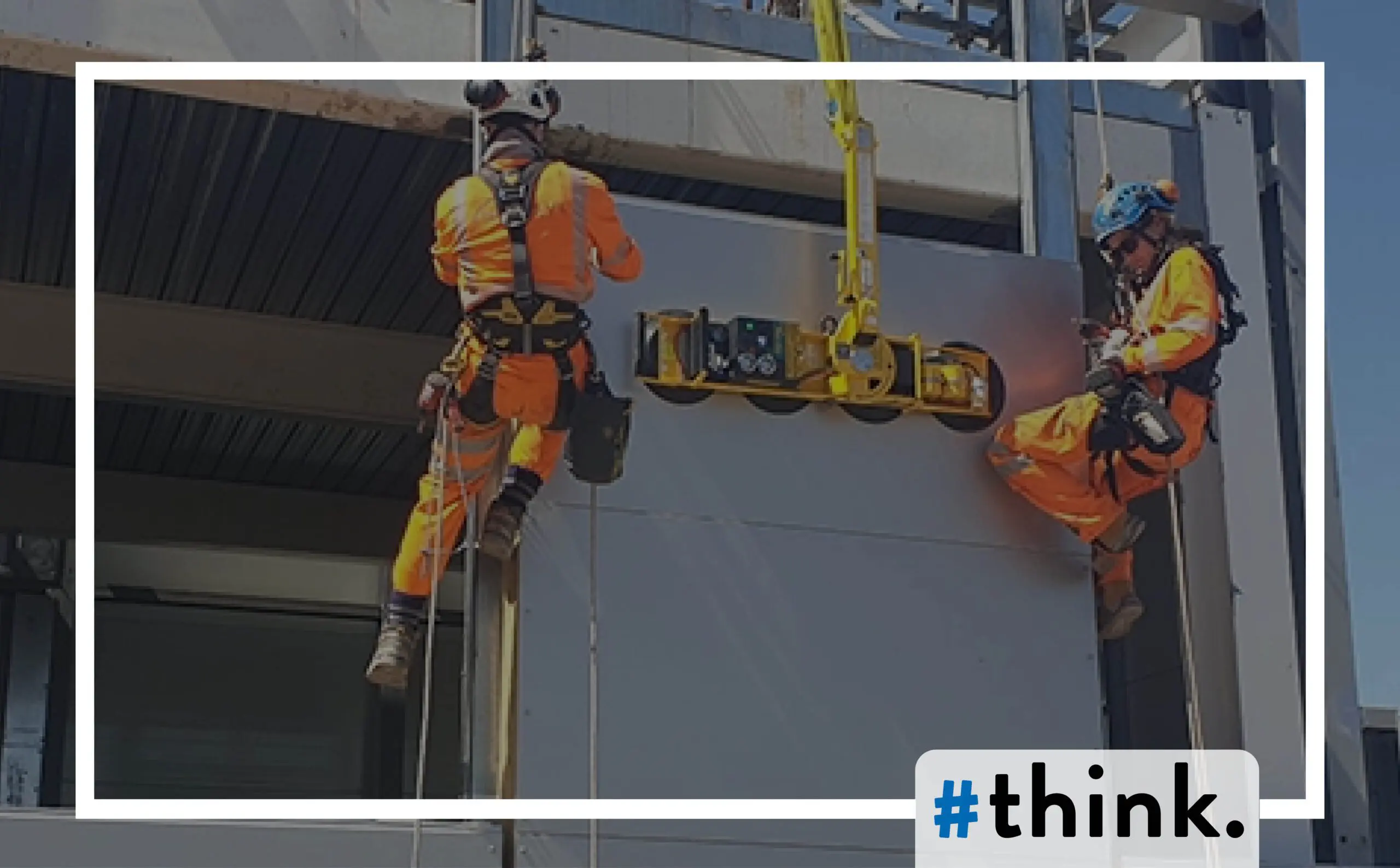
One of the practical challenges with industrial cladding maintenance is access. Many industrial buildings are large, tall, or surrounded by operational plant that makes conventional scaffold impractical. This is where the combination of rope access and cladding expertise becomes particularly valuable — allowing technical survey and remedial work to be carried out safely, quickly, and with minimal disruption to surrounding operations.
Think Industrial Services combines cladding expertise with in-house rope access and scaffolding capability, meaning we can survey, plan, and deliver cladding maintenance as a fully integrated package. If you’re unsure of the current condition of your building envelope, our free site assessment is a good place to start.
Contact us to arrange a free survey.